At a hotel, "check in" in Mandarin Chinese is 入住 (rùzhù). Say 你好,我想办理入住。 (Nǐ hǎo, wǒ xiǎng bànlǐ rùzhù.) "Hello, I'd like to check in." If you have a booking, add 我预订了房间。 (Wǒ yùdìng le fángjiān.) "I booked a room."
入住 names the check-in; 办理 (bànlǐ) means to handle or process something. Together, 办理入住 (bànlǐ rùzhù) describes completing the check-in. This guide follows that hotel conversation, not airline check-in or checking in on a friend.
Find your reservation, or ask for a room
At the front desk, 前台 (qiántái), start with the booking you actually have.
| Situation | Say | Pinyin |
|---|---|---|
| You booked a room | 我预订了房间。 | Wǒ yùdìng le fángjiān. |
| You are giving your name | 我叫… | Wǒ jiào… |
| You did not book | 我没有预订。 | Wǒ méiyǒu yùdìng. |
| You want to ask about availability | 请问,有空房间吗? | Qǐngwèn, yǒu kōng fángjiān ma? |
预订 (yùdìng) means to book ahead. In the last question, 空 (kōng) means empty, so 空房间 (kōng fángjiān) is a vacant room. The question means "Excuse me, do you have any rooms available?"
Give the name used for the reservation rather than introducing a different nickname. Keep the booking confirmation ready to show if the spoken name is hard to match.
- bàn办lǐ理HSK4
to handle; to transact
- Example办法bàn fǎway of handling sth; means
- yù预dìng订HSK5
to place an order; to book ahead
- Example预习yù xíto prepare a lesson
- yā押jīn金HSK5
deposit; down payment
- Example奖金jiǎng jīnpremium; award money
One room is not one night
Two questions can sound similar when you are tired:
- 要几间房? (Yào jǐ jiān fáng?) How many rooms do you want?
- 住几晚? (Zhù jǐ wǎn?) How many nights are you staying?
Listen for what comes after 几 (jǐ), "how many". 间 (jiān) counts rooms; 晚 (wǎn) means night. 住 (zhù) means to stay here.
For one room and two nights, answer:
一间房,住两晚。 (Yì jiān fáng, zhù liǎng wǎn.) One room, staying two nights.
For two rooms and one night, change both numbers:
两间房,住一晚。 (Liǎng jiān fáng, zhù yì wǎn.) Two rooms, staying one night.
The numbers are small; the difference in the booking is not.
The pinyin in these sentences shows the spoken change of 一 from yī to yì before a first or third tone: 一间 (yì jiān), 一晚 (yì wǎn). Other tones retain their dictionary marks. See the tone-change rules for 一.
If you are choosing a room, specify the beds too:
- 大床房 (dàchuángfáng): a room with one double, queen or king bed.
- 双床房 (shuāngchuángfáng): a twin room, with two beds.
For the second option: 我想要一间双床房。 (Wǒ xiǎng yào yì jiān shuāngchuángfáng.) "I'd like a twin room." If you are booking at the desk, ask 多少钱一晚? (Duōshao qián yì wǎn?) "How much per night?" before agreeing to the room.
Recognise the passport and deposit questions
请出示护照。 (Qǐng chūshì hùzhào.) means "Please show your passport." The word to catch is 护照 (hùzhào), passport. You can reply 这是我的护照。 (Zhè shì wǒ de hùzhào.) "This is my passport."
If the receptionist mentions 押金 (yājīn), they mean a deposit. Ask rather than guessing an amount or a refund time:
- 押金是多少? (Yājīn shì duōshao?) How much is the deposit?
- 押金什么时候退? (Yājīn shénme shíhou tuì?) When will the deposit be refunded?
These are questions to use if a deposit comes up, not a claim that every hotel takes one or returns it on the same schedule.
If you miss an answer, say 请再说一次。 (Qǐng zài shuō yí cì.) "Please say it again." Olle Linge includes this phrase in his classroom Mandarin guide. It works at a reception desk too. For more request patterns, see please in Chinese.
Before taking the room key
这是您的房卡。 (Zhè shì nín de fángkǎ.) means "Here is your room key card." 房卡 (fángkǎ) is the card, not the room number.
Before leaving the desk, two questions can settle details of your stay:
- 包括早餐吗? (Bāokuò zǎocān ma?) Is breakfast included?
- 请问,几点退房? (Qǐngwèn, jǐ diǎn tuìfáng?) Excuse me, what time is check-out?
早餐 (zǎocān) is breakfast; 退房 (tuìfáng) means to check out of a hotel room. Asking the time avoids assuming a particular hotel's deadline. When you return to check out, 我要退房。 (Wǒ yào tuìfáng.) means "I'd like to check out."
To understand the receptionist's answer, practise telling time in Chinese, including minutes, half past and morning versus afternoon.
For the next conversation after you settle in, practise ordering food in Chinese.
Rehearse a check-in with a mix-up
You have booked one room for two nights. Cover the suggested answers and respond aloud.
- Greet the receptionist and say you would like to check in.
- Say you booked a room, then give your own name.
- The receptionist asks 两间房? (Liǎng jiān fáng?), "Two rooms?" Correct the room count and confirm the nights.
- You hear 押金 (yājīn). Ask how much it is.
- Before leaving the desk, ask the check-out time.
Suggested answers:
- 你好,我想办理入住。 (Nǐ hǎo, wǒ xiǎng bànlǐ rùzhù.) Hello, I'd like to check in.
- 我预订了房间。我叫… (Wǒ yùdìng le fángjiān. Wǒ jiào…) I booked a room. My name is…
- 一间房,住两晚。 (Yì jiān fáng, zhù liǎng wǎn.) One room, staying two nights.
- 押金是多少? (Yājīn shì duōshao?) How much is the deposit?
- 请问,几点退房? (Qǐngwèn, jǐ diǎn tuìfáng?) Excuse me, what time is check-out?
Now test the words without the front-desk clues.
入住Tap to reveal
rùzhùto check in; to move in
预订Tap to reveal
yù dìngto place an order; to book ahead
房间Tap to reveal
fáng jiānroom
护照Tap to reveal
hùzhàopassport
押金Tap to reveal
yā jīndeposit; down payment
晚Tap to reveal
wǎnevening; night
Got it: 0 of 6
When a word such as 房间 appears on Lock In's Lock Screen widget, use it as a cue to say your room count and length of stay. Change just one of them on the next attempt. This is your own speaking exercise; the widget does not check a hotel booking or grade your sentence.
Further reading
- HSK Academy: 房间, including the room-counting word 间, and 押金, for the deposit vocabulary.
- Olle Linge, Hacking Chinese: Classroom Mandarin, for ways to ask for repetition and clarification.
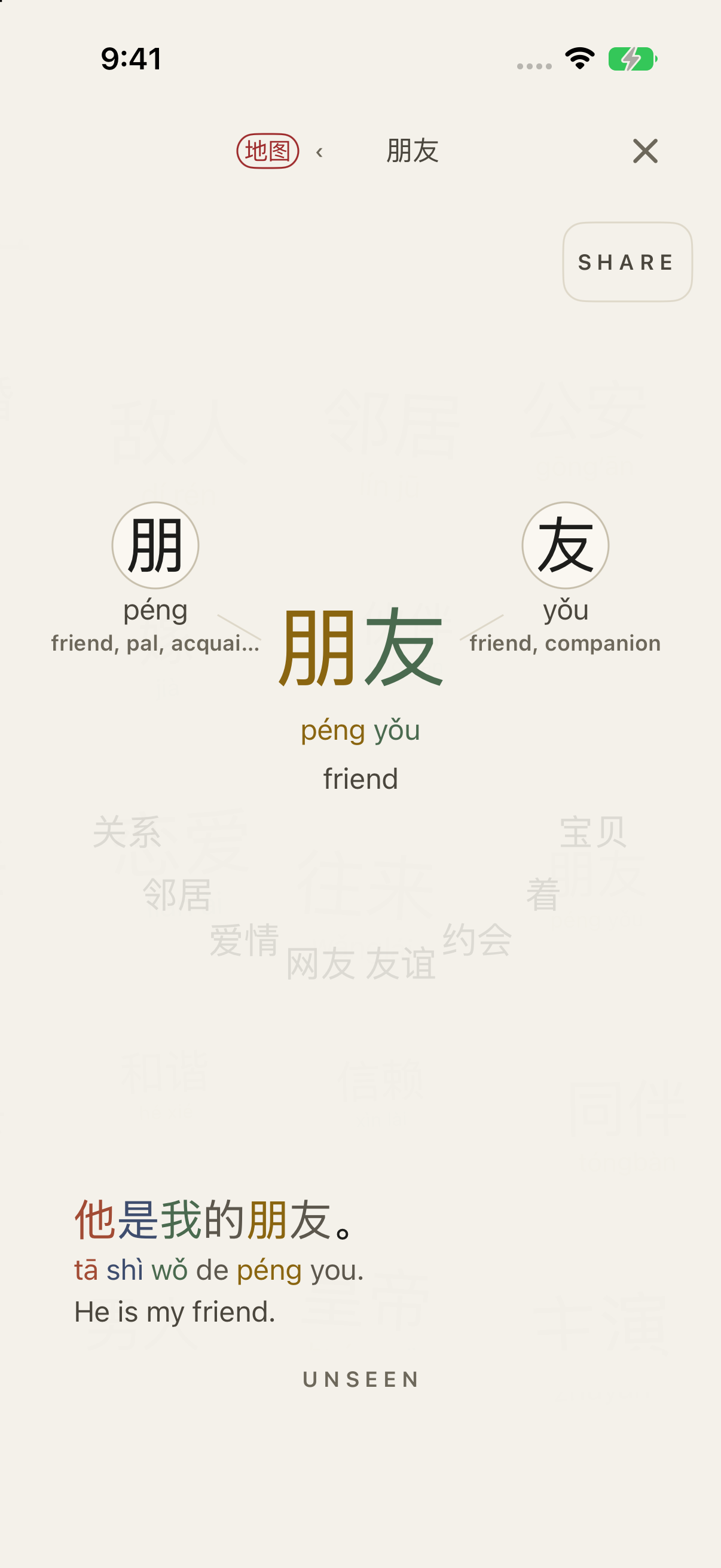
Every word opens like this in Lock In
Characters, readings and a real sentence, on your lock screen.

Word data: CC-CEDICT, CC BY-SA 4.0, adapted.